
How Much Does an Electrical Panel Upgrade Cost in San Diego?
By Mason Garry · October 7, 2026 · 6 min read
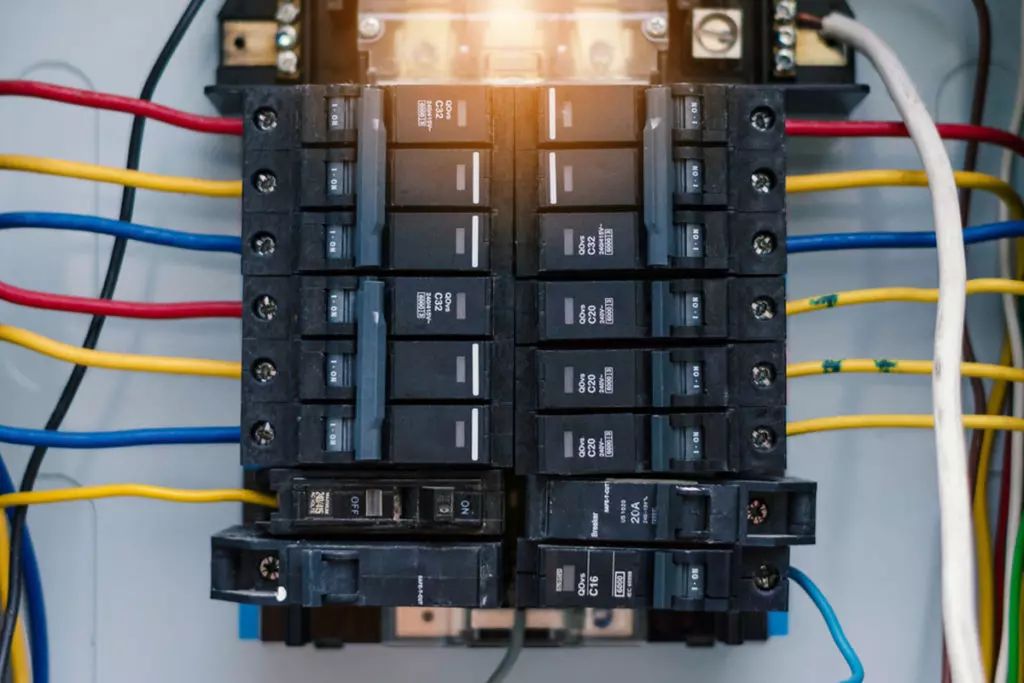
If you're searching for the electrical panel upgrade cost in San Diego, here's the straight answer: most 100-amp to 200-amp upgrades in San Diego County land between $2,800 and $4,500, permit and inspection included. A simple like-for-like panel swap can run $1,800–$3,000, and complicated jobs — relocations, service mast rebuilds, stucco repair — can push past $5,000. Every home is different, but those ranges cover the vast majority of what we see.
I'm a master electrician, and I've done this job hundreds of times across this county — mid-century ranch homes in San Diego, beach cottages in Del Mar, big estates in Rancho Santa Fe. Below is what it actually costs, what moves the number, and how to tell a fair quote from a bad one. No fluff.
Electrical Panel Upgrade Cost in San Diego: What Homeowners Actually Pay
Let's put real numbers on the three jobs we do most:
- Like-for-like panel replacement (100A → 100A): $1,800–$3,000. Same amperage, new modern panel. Common when the old panel is a Zinsco or Federal Pacific that needs to go but the service size is fine.
- Standard upgrade (100A → 200A): $2,800–$4,500. This is the bread and butter. New 200-amp panel, grounding and bonding brought up to code, permit, inspection, utility coordination. Done in a day.
- Complex upgrade: $4,500–$7,000+. Panel relocation, new underground service, mast rebuild, subpanels added, or significant drywall/stucco repair around the work.
Those numbers include the permit — which in San Diego County typically runs a few hundred dollars — and the inspection. If a quote doesn't mention the permit, that's your first red flag. More on that below.
What Drives the Price Up (or Down)
Two houses on the same street can get very different quotes, and it's usually legitimate. Here's what actually moves the number:
- Amperage jump. Going 100A → 200A means bigger conductors, a new meter socket, and often a new service mast. A straight swap at the same amperage is genuinely less work and less material.
- Panel brand and breaker count. A 40-space Square D or Siemens panel costs more than a 20-space budget panel — and you want the spaces. Running out of breaker slots five years from now is how you end up paying for the job twice.
- Panel location. Exterior panels on stucco are the San Diego standard and usually straightforward. Interior panels in a garage or closet can mean drywall work, rerouting, and tighter working conditions.
- Overhead vs. underground service. Overhead drops are simpler. Underground service in a conduit that's too small — or direct-buried cable that needs replacing — adds real cost.
- Grounding and bonding. Older homes often have grounding that doesn't meet current code. Bringing it up to standard is non-negotiable and takes time — any quote that skips it isn't a complete quote.
- Stucco and finish repair. Swapping a panel in a stucco wall means cutting stucco and patching it after. Some electricians include the patch; some leave you with a hole and a stucco guy's phone number. Ask which one you're getting.
- Subpanels and extras. Adding a subpanel for a garage, ADU, or workshop is common alongside an upgrade and adds to the ticket — but it's cheaper to do it while we're already there.
Not sure what your panel needs?
We'll look at it free, tell you straight whether you need a full upgrade or just a swap, and put one written price on it.
See Our Panel Upgrade Service →Permits and Utility Fees in San Diego County
Yes, you need a permit. Every city in San Diego County — and the unincorporated county — requires an electrical permit and inspection for a panel upgrade or service change. The permit itself is typically a few hundred dollars, and it's included in our quotes, not tacked on later.
There's also the utility side. SDG&E has to disconnect and reconnect your service while we swap the panel. We coordinate that — you don't call SDG&E yourself, you don't sit on hold, and you don't guess at the scheduling. On most jobs the power is off for a few hours, mid-morning to early afternoon, and it's back on the same day.
Here's why the permit matters beyond the paperwork: an unpermitted panel upgrade can blow up a home sale. Buyers' inspectors check for permits, and insurance companies ask too. The few hundred dollars you "save" skipping the permit can cost you thousands at closing — or worse, leave you uninsured if something goes wrong. Get the permit. Every time.
When a Cheap Quote Should Worry You
I'm not going to tell you the lowest bid is always bad. But in this trade, quotes that come in way under the pack usually mean something's missing. Watch for:
- No permit mentioned. If the quote doesn't say "permit and inspection included," assume it's not. Ask directly.
- No license number on the quote. California requires it on all advertising and contracts. Ours is CA #1076133 — it's on every page of this site for a reason.
- Vague scope. "Replace panel" with no mention of amperage, brand, grounding, or breaker count isn't a quote — it's a guess. You want specifics in writing.
- Cash-only, no paperwork. A legitimate contractor gives you a written contract with the license number, scope, price, and warranty. Anything less and you have no recourse if it goes sideways.
- Pressure to decide today. "This price is only good if you sign now" is a sales tactic, not a scheduling reality. A fair price is still fair tomorrow.
The most expensive panel upgrade is the one you pay for twice — once to the cheap guy, once to the licensed guy who fixes it. I've seen that movie. It's never worth it.
Future-Proofing: EV Chargers, Solar, and What's Next
Here's the question I ask every homeowner before we size a panel: what's coming in the next ten years? An EV charger needs a dedicated 50-amp circuit. Solar plus battery backup changes the math. A home addition or ADU changes it again.
Going to 200 amps now — with plenty of breaker spaces — is almost always cheaper than upgrading again later. The incremental cost of a bigger panel and more spaces during the job is small. Doing a second upgrade five years from now is a whole second job at full price. Size it once, size it right.
If you're already thinking about an EV, read our breakdown of EV charger installation — most chargers need that 50-amp circuit, and your panel has to have the capacity first. That's exactly the kind of thing we check during the free assessment.
What's Included When We Do It
So you know what "done right" looks like, here's what our panel upgrades include, every time:
- Full panel replacement with a modern, code-compliant unit — sized with room to grow
- Grounding and bonding brought up to current code
- Permit pulled, inspection scheduled and passed — handled entirely by us
- SDG&E disconnect/reconnect coordination
- Labeled breakers, so you know what controls what
- Work area left clean
- One written price before we start — no surprises
Most jobs are done in a single day. You call, we assess free, you get a written quote, we do the work. That's the whole process.
Get Your Free Panel Assessment
We'll look at your current panel, check your service size, and give you one straight written price — free, no obligation, no pressure. Serving Del Mar, San Diego, Carmel Valley, Rancho Santa Fe, Solana Beach, and Encinitas.
Request My Free Quote →Prefer to talk? Call (775) 790-3699
Panel Upgrade Cost FAQ
How long does a panel upgrade take?
Most residential panel upgrades are finished in a single day. Your power is typically off for a few hours while we swap the panel and the utility reconnects service.
Do I need a permit for a panel upgrade in San Diego?
Yes. Panel upgrades require an electrical permit and inspection in San Diego County. We pull the permit, schedule the inspection, and coordinate with SDG&E — it's all included.
Can my panel be upgraded from 100A to 200A without digging?
Usually, yes. Most homes have overhead or existing underground service that can carry 200A with a new mast or conductors. We verify during the free assessment — if trenching is needed, you'll know before you commit.
Will my power be off all day during the upgrade?
No — typically just a few hours. We schedule the utility disconnect for the morning, do the swap, and have SDG&E reconnect the same day. Plan around it like a half-day errand, not a blackout.