
EV Charger Installation Cost in San Diego: What Homeowners Actually Pay
By Mason Garry · October 14, 2026 · 6 min read
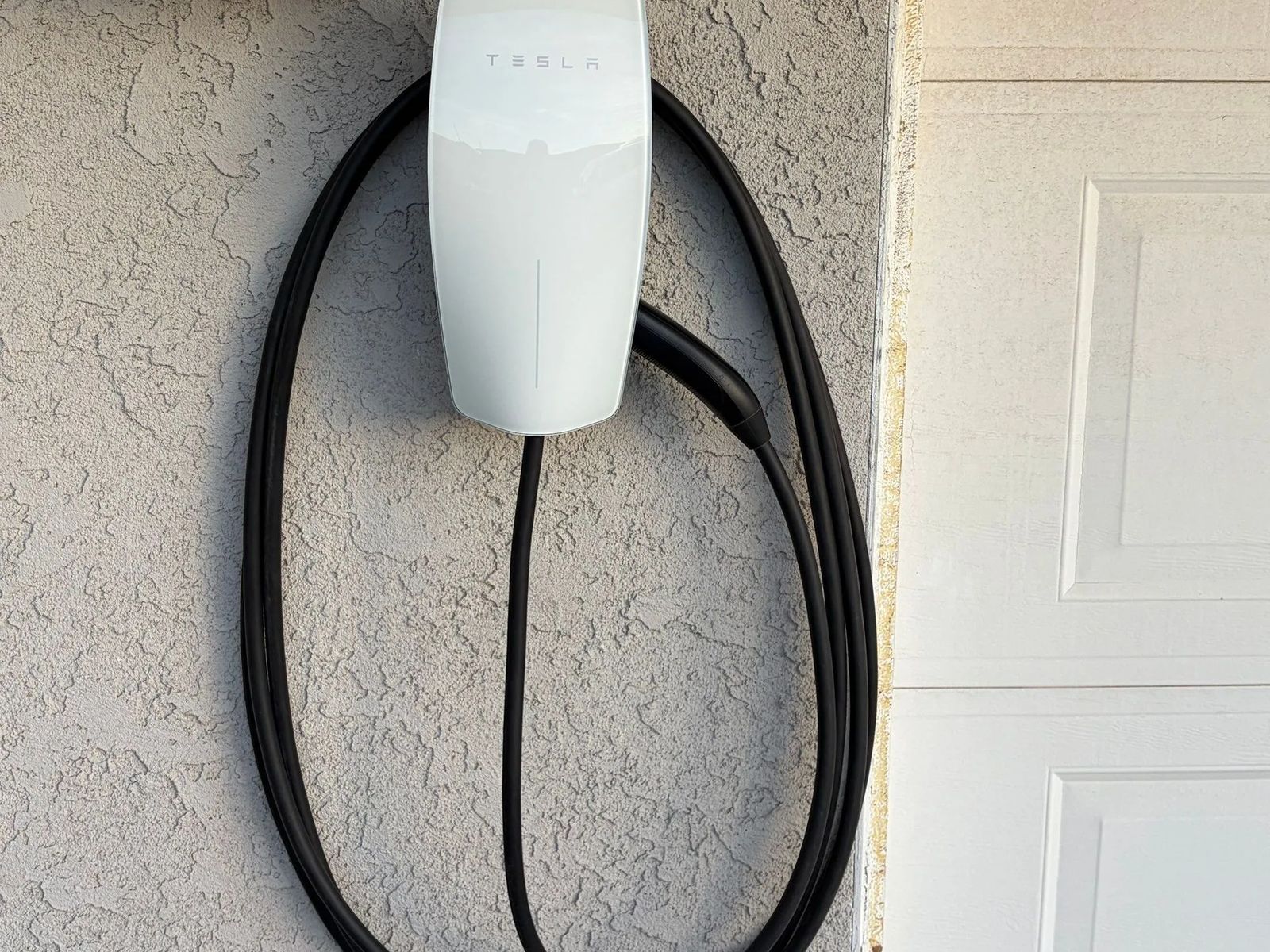
If you're searching for the ev charger installation cost san diego homeowners actually pay, here's the straight answer: most straightforward Level 2 installs land between $1,100 and $1,900 total, charger included. If your panel is right next to where the car parks, you can come in under that. If the panel is on the other side of the house, the garage is detached, or your panel needs an upgrade first, the number goes up — sometimes by a lot. Below is what actually moves the price.
I'm a master electrician. I install Tesla Wall Connectors and universal Level 2 chargers across San Diego County — Del Mar, Carmel Valley, Rancho Santa Fe, Solana Beach, Encinitas, and San Diego. This is the same breakdown I give homeowners at the kitchen table. No fluff.
EV Charger Installation Cost in San Diego: The Real Breakdown
There are two parts to every quote: the charger itself, and the electrical work to feed it safely. Here's how they stack up on the jobs we do most:
- The charger: $400–$700. A Tesla Wall Connector and most quality universal Level 2 chargers sit in this range. You can buy cheaper units online — I don't recommend it. The charger runs for hours at full load, every night. Buy a listed, name-brand unit.
- Simple install: $650–$1,100 in labor and materials. Panel in or near the garage, short wire run, open breaker space, capacity to spare. This is the best case, and it's common in newer Carmel Valley and San Diego homes.
- Standard install: $1,100–$1,900 total. Charger plus a moderate wire run — through an attic, across a garage, or around the side of the house. This covers the majority of jobs we quote.
- Long or difficult run: $1,900–$2,800+ total. Panel on the opposite side of the house, a detached garage that needs trenching, or conduit through finished spaces. The wire, conduit, and labor add up fast — copper isn't cheap.
- With a panel upgrade: add $2,800–$4,500. If your panel can't carry the load, the charger waits until the panel can. More on that below — and on what that upgrade itself costs in our panel upgrade cost breakdown.
Those numbers include a dedicated 50-amp, 240-volt circuit in most cases, the permit, and the inspection. If a quote you're holding doesn't mention a permit, ask why — that's coming up too.
What Drives the Price Up (or Down)
Two neighbors can get quotes $1,000 apart and both can be fair. Here's what actually makes the difference:
- Distance from the panel. This is the number one factor. Ten feet of wire through an open garage wall is a different job than eighty feet through an attic and down an exterior wall. Wire, conduit, and time all scale with distance.
- Panel capacity. Before we quote, we run a load calculation. A 200-amp panel with space usually clears easily. A loaded 100-amp panel might not — and "might not" means we do the math, not guess.
- Panel space. Capacity and space are different problems. A panel can have the amperage but no open breaker slots. Sometimes that's a simple fix; sometimes it's the nudge toward the upgrade you needed anyway.
- Garage type. Attached garages are usually straightforward. Detached garages can mean trenching and underground conduit — real work, real cost, quoted up front.
- Charger amperage. Most home chargers run on a 50-amp circuit and add roughly 30 miles of range per hour of charging — plenty for overnight. Higher-output setups need bigger wire and more panel capacity. For most drivers, it's money spent on speed you'll never notice while you sleep.
- Wall and finish work. Fishing wire through finished walls takes longer than running surface conduit in a garage. We'll tell you which approach your house needs and what each looks like.
Not sure what your install would run?
We'll check your panel's capacity, measure the run, and put one written price on it — free. No guessing, no obligation.
See Our EV Charger Installation Service →The Panel Question: Do You Need an Upgrade First?
This is where honest electricians separate from salesmen. An EV charger is one of the biggest continuous loads in your house — it pulls hard for hours. Plugging that into a panel that can't carry it isn't a shortcut, it's a problem waiting for a hot night when the AC is also running.
Here's the plain version: newer 200-amp panels usually handle a charger fine. Older 100-amp panels are a maybe — it depends on what else your house draws. And if your panel is a Zinsco or Federal Pacific, we'll have a different conversation first, because those panels have known failure issues with or without an EV in the garage.
When an upgrade is needed, I know it's not what you wanted to hear — you called about a charger, not a panel. But doing it in the right order saves you money: one permit process, one mobilization, and a panel sized for the solar, the addition, or the second EV that's probably coming anyway. If your panel clears the load calculation, I'll tell you that too, and we'll just install the charger.
Permits, Inspections, and Charging Cheap Overnight
In most San Diego County jurisdictions, a new dedicated EV charger circuit requires an electrical permit and inspection. The permit typically runs a few hundred dollars and is included in our quotes. We pull it, do the work, and meet the inspector — you don't deal with any of it.
Why bother? Same reason as any permitted work: it's verified safe, it's on record when you sell the house, and your insurance company never gets to ask questions about an unpermitted 50-amp circuit if anything ever goes wrong in that garage.
One money tip once you're installed: charge overnight. Electricity rates in SDG&E territory vary by time of use, and overnight off-peak charging is the cheapest way to run an EV. Most chargers and most cars let you schedule charging to start after midnight — set it once and forget it. The savings over daytime charging and public fast chargers are where home charging really pays for itself.
Level 1 vs. Level 2: Why Most People Upgrade
Your car probably came with a Level 1 cord that plugs into a regular outlet. It works — slowly. You're looking at roughly 3 to 5 miles of range per hour, which means a near-empty battery can take well over a day to fill. For a short commute and a plug-in hybrid, that can honestly be enough.
Level 2 is the 240-volt charger this whole post is about: roughly 25 to 35 miles of range per hour, a full charge overnight, every night. If you drive a full EV daily — commuting from Encinitas or Carmel Valley, say — Level 2 is the difference between planning your week around charging and never thinking about it. That's what people are actually buying: not speed, convenience.
What about rebates and incentives? Programs come and go at the federal, state, and utility level, and the details change often enough that I won't put a dollar figure here that might be stale by the time you read it. Check SDG&E's and the state's current programs before you buy — if there's money available for your install, take it. Our invoice and permit paperwork give you what you need to apply.
Get Your Free EV Charger Assessment
We'll run the load calculation on your panel, measure the run, and give you one straight written price — free, no obligation, no pressure. Serving Del Mar, San Diego, Carmel Valley, Rancho Santa Fe, Solana Beach, and Encinitas.
Request My Free Quote →Prefer to talk? Call (775) 790-3699
EV Charger Installation FAQ
How much does it cost to install a Level 2 EV charger in San Diego?
Most homeowners pay $1,100 to $1,900 total for a straightforward Level 2 install, including the charger. A simple install next to the panel can be less, and long wire runs or a panel upgrade can push the total higher.
Do I need a panel upgrade to install an EV charger?
Sometimes. If your panel is 100 amps and already heavily loaded, full, or an older Zinsco or Federal Pacific unit, an upgrade may be needed first. We run a load calculation during the free assessment and tell you straight.
How long does EV charger installation take?
Most straightforward installs are finished in half a day. Jobs that need a panel upgrade, trenching to a detached garage, or a long conduit run take longer — you'll know the timeline before we start.
Do I need a permit for an EV charger in San Diego County?
Yes, in most San Diego County jurisdictions a dedicated EV charger circuit requires an electrical permit and inspection. We pull the permit and handle the inspection as part of the install.