
Whole-Home Surge Protectors: Worth It in San Diego?
By Mason Garry · November 4, 2026 · 6 min read
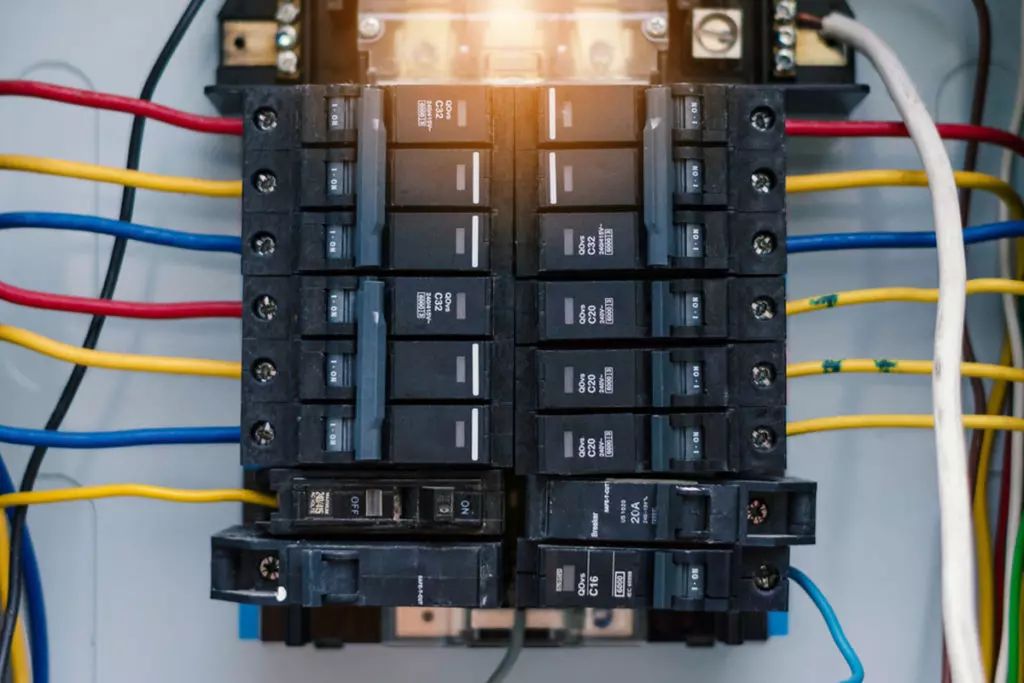
If you are pricing a whole home surge protector san diego homeowners can actually rely on, here is the straight answer: a standalone install at an accessible panel typically runs $200 to $800 total, with many straightforward jobs landing around $300 to $500. Added during a panel upgrade, when we are already in the panel, it is usually $150 to $400 more. For most modern San Diego homes, yes, it is worth it. Not because of lightning. Because your house is now full of expensive electronics that a single voltage spike can quietly kill.
I'm Mason Garry, a master electrician. Peak Electric is based in Del Mar at 13078 Caminito del Rocio, CA #1076133 and NV #0081186, and we serve Del Mar, Carmel Valley, Rancho Santa Fe, Solana Beach, Encinitas, and San Diego. Below is what the device does, what it does not do, what California code actually requires, and how to buy one without overpaying for numbers that do not matter.
Whole Home Surge Protector San Diego: What It Actually Costs
Start by separating the device from the job:
- Device alone: $60 to $300 for most Type 2 units. Solid residential models usually land between $100 and $200. Type 1 devices run about $100 to $500.
- Standalone install: $200 to $800 total. Device, labor, and a proper connection at the panel. Most simple jobs at an accessible panel with free breaker space land around $300 to $500.
- Added during a panel upgrade: $150 to $400 incremental. This is the cheapest time to do it, because the panel is already open and the electrician is already there.
Those are national ranges, and San Diego labor runs above the national average, so treat the top of the range seriously and get a real bid. What pushes a job higher is not the protector itself. It is no free breaker space, a subpanel that needs work, or a grounding problem. A surge protector diverts excess voltage to ground, so it is only as good as the grounding path behind it. If that path is weak, fixing it is separate work, and any honest quote will call it out before the install, not after.
If you are already planning panel work, read our panel upgrade cost breakdown for San Diego first. Combining the two jobs is where most homeowners save real money on this.
What It Does, and What It Does Not Do
A whole-home surge protector is a surge protective device, or SPD, hard-wired at your service equipment or main panel. When a voltage spike comes in, it clamps the spike and diverts the excess to ground before it travels through the circuits in your house.
The everyday spikes here are not dramatic. They come from utility switching, from the moment power comes back after an outage, and from large loads in and around the home cycling on and off. That restoration moment is the one I see do damage. The power was off and nothing happened. Then it came back, and a board in the fridge, the HVAC control, or a garage opener stopped working.
Be clear on the limits:
- It does not stop a direct lightning strike. No panel device does. San Diego is not a high lightning market anyway, so do not buy one out of lightning fear. Buy it for electronics density and everyday transients.
- It does not replace point-of-use protection. Some residual voltage still gets past the panel. Sensitive gear still benefits from a second layer at the outlet.
- It wears out. SPDs are consumable. The internal components degrade as they absorb surges. Check the status light periodically and after a major event. If the light is out, the protection is gone, even if power still flows normally.
Want your panel and grounding checked first?
A surge protector is only as good as the panel and grounding it is tied to. We will check both and tell you straight if a protector will actually do its job in your home.
See Our Safety Inspection Service →Does California Code Require One? Here Is the Honest Version
This is where a lot of online advice gets it wrong, so let me be precise. California enforces the 2022 California Electrical Code, based on the 2020 NEC, effective January 1, 2023. NEC 230.67 says services supplying dwelling units must be provided with a Type 1 or Type 2 SPD, located at the service disconnect or immediately adjacent to it, and when service equipment is replaced, surge protection must be installed.
What that means in plain English: if you are upgrading or replacing your panel in California today, an SPD is not an upsell. It is required to pass. If your panel is staying put, it is a choice, and for most modern homes a good one.
What it does not mean: it does not mean every existing San Diego home is suddenly required to install one tomorrow, and no inspector is coming door to door. Anyone who tells you every existing California home is now required to install one is flattening the rule to sell you a job. You do not need a scare tactic to justify a $300 to $500 device that protects thousands of dollars of electronics. The math justifies itself.
Type 1, Type 2, and Power Strips: Layered Protection
You will see three types under UL 1449, and they are not interchangeable:
- Type 1: Permanently connected, can sit on the line side of the service disconnect, including meter socket types. Nominal discharge rating of 10kA or 20kA.
- Type 2: Load side of the service disconnect. This is the common panel-mounted choice for homes, and the one most of our installs use.
- Type 3: Point-of-use devices. Power strips, plug-ins, and receptacle types at the equipment itself. Useful as a second layer. They do not satisfy the code requirement, and they are not a substitute for a panel device.
Think of it in layers. The panel SPD takes the big incoming hit. A quality point-of-use protector at a computer, TV, or home theater cleans up what is left for that specific gear. That layered approach is the right frame. One device at one location was never going to do everything perfectly.
When you compare models, look for a UL 1449 listing, a clear status indicator light, and a connected equipment warranty. Surge current ratings on common residential units run roughly 36kA to 108kA. Treat that number as capacity and endurance, not as a promise that a higher number protects your TV proportionally better. And note this: many manufacturer warranties require licensed installation. This is not a DIY job. Type 1 and Type 2 devices connect inside a live main panel or at the meter. That is licensed electrician work, full stop.
Why San Diego Homes Need It More Than They Used To
Walk through a typical home in Carmel Valley, Solana Beach, or Encinitas today and count the boards. Solar inverter and battery system. EV charger. Variable-speed HVAC. A fridge, washer, and range that all run on control boards. None of that load existed when many local panels went in.
That is the real case here. Not storms. Electronics density. One spike that would have done nothing to a 1990s home can now take out an appliance board that costs more to replace than the protector would have cost to install. If you have added solar, a battery, or a charger in the last few years, you have added exactly the kind of equipment this device is built to protect. Our EV charger installation cost guide covers that circuit in detail, and a panel SPD is a natural companion to it.
My verdict is simple. If we are already opening your panel for an upgrade, add it. The incremental cost is low and code requires it on that job anyway. If your panel is not being touched, it is still worth doing as a standalone job if your home has solar, an EV charger, newer board-driven appliances, or a home office you cannot afford to lose. If your panel and grounding need work first, do that first. Protection tied to a bad ground is money spent on a device that cannot do its job.
Get a Free Quote on Surge Protection
We will look at your panel, check breaker space and grounding, and put one straight written price on the job. Free, no obligation, no pressure. Serving Del Mar, San Diego, Carmel Valley, Rancho Santa Fe, Solana Beach, and Encinitas.
Request My Free Quote →Prefer to talk? Call (775) 790-3699
Whole-Home Surge Protector FAQ
Does California require a whole-home surge protector in every home?
No. Under NEC 230.67 in the 2022 California Electrical Code, a Type 1 or Type 2 surge protective device is required for a new dwelling service and when service equipment is replaced, such as during a panel upgrade. It is not a retroactive requirement for every existing home with untouched service equipment.
How much does a whole-home surge protector cost in San Diego?
A Type 2 device alone typically runs $60 to $300. A standalone licensed install at an accessible panel typically runs $200 to $800 total, with many straightforward jobs landing around $300 to $500. Added during a panel upgrade, the incremental cost is typically $150 to $400.
Will a whole-home surge protector stop a direct lightning strike?
No. No panel surge protector stops a direct lightning strike to a house. Its job is clamping everyday voltage spikes from utility switching, outage restoration, and large loads cycling on and off.
Do I still need power strips if I have a surge protector at the panel?
For sensitive electronics, yes. The panel device handles large incoming surges, but some residual voltage still passes. A quality point-of-use protector at a computer, TV, or home theater is a useful second layer, not a substitute for the panel device.